The vaping industry has rapidly evolved, bringing various techniques to enhance user experience. Among these techniques, two prominent methods stand out: MTL (mouth-to-lung) and DTL (direct-to-lung) vaping. Understanding "What is the difference between MTL and DTL vaping" is crucial for both new and experienced vapers. According to a recent report by the Vape Industry Association, approximately 70% of vapers prefer MTL for its smoother experience, while DTL is favored for its intense flavor and cloud production.
Expert and vaping consultant Dr. Sarah Thompson emphasizes, “Choosing between MTL and DTL should depend on personal preferences and desired outcomes.” This insight is vital as it recognizes the subjective nature of vaping. Despite the clear distinctions, many users find it challenging to choose. MTL typically offers a cigarette-like experience, which appeals to smokers transitioning to vaping. Conversely, DTL provides a direct inhale, producing larger vapor clouds.
Despite the advantages of each method, some users report confusion and dissatisfaction. Often, beginners may start with one technique but feel disoriented by the variety. It’s essential to explore both methods for a more enjoyable vaping journey. Understanding these nuances can help vapers make informed choices, ensuring their preferences align better with their smoking habits and desired experiences.
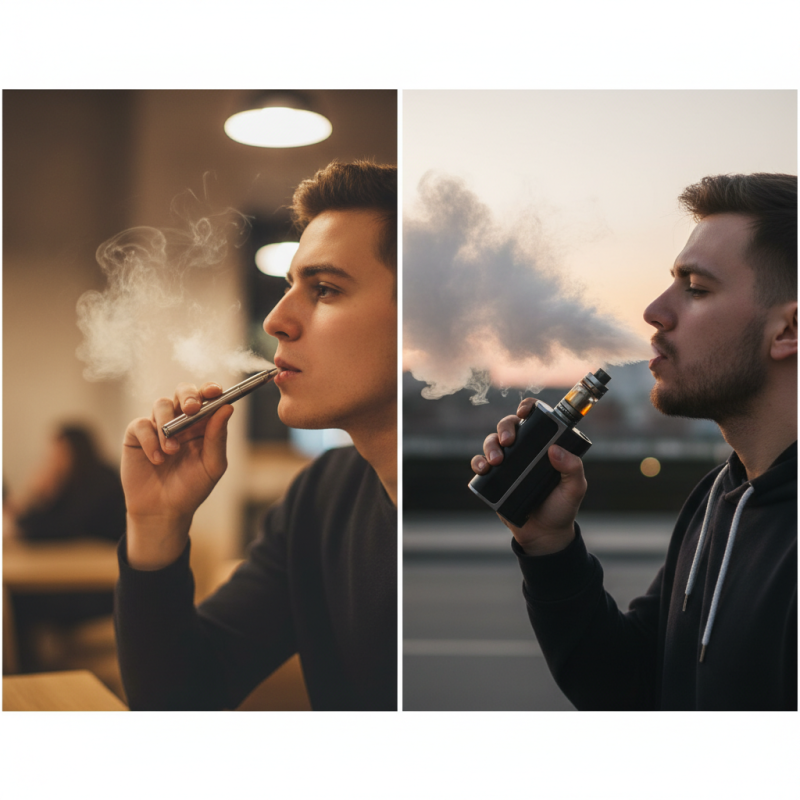
Understanding MTL (Mouth-to-Lung) and DTL (Direct-to-Lung) Vaping Techniques
When it comes to vaping, the techniques of MTL (Mouth-to-Lung) and DTL (Direct-to-Lung) differ significantly.
MTL is popular among former smokers. It mimics the action of smoking a traditional cigarette. Users draw vapor into their mouths first before inhaling into the lungs. This method provides a smoother experience and allows for a more pronounced flavor. It often uses higher nicotine levels, making it appealing to those who seek a satisfying hit.
On the other hand, DTL involves inhaling vapor directly into the lungs. This technique is favored by cloud chasers. It allows for large vapor production and often uses lower nicotine levels. The experience can be intense and may feel less restrictive. Users might find this approach more challenging initially. However, with practice, many appreciate the full-bodied flavor and vapor volume that DTL offers.
Both techniques have their pros and cons. MTL may be more comfortable for beginners, while DTL can provide a more robust experience. Selecting the right technique often reflects individual preferences and goals. Adapting to either style may involve some trial and error, as users find what works best for them. Understanding these differences helps vapers navigate their choices more effectively.
Key Differences in Vaping Experience Between MTL and DTL
The vaping scene is rich with diverse techniques, and
MTL (Mouth-to-Lung) and
DTL (Direct-to-Lung) are two popular methods.
Each provides a unique experience dictated by inhalation styles, devices, and personal preferences.
MTL mimics the sensation of smoking a traditional cigarette.
You take a slow draw into your mouth before inhaling into the lungs.
This method allows for a more nuanced taste of flavors.
Many users find MTL satisfying, especially if they aim to quit smoking.
On the other hand,
DTL is about direct inhalation into the lungs.
It often produces larger vapor clouds and intense flavor bursts.
Devices suited for DTL usually have lower resistance coils and higher wattage.
This style requires a different lung capacity and technique.
It might feel overwhelming for those new to vaping.
It's worth noting that DTL can lead to a quicker nicotine intake,
which can be intense for some users.
Finding the right balance and technique can enhance the vaping experience for both methods.
Nicotine Concentration and Its Impact on MTL and DTL Preferences
Nicotine concentration greatly influences vaping preferences, particularly for
MTL (Mouth-To-Lung) and DTL (Direct-To-Lung) techniques.
MTL smokers often prefer higher nicotine levels. A stronger hit simulates the experience of traditional cigarettes.
This technique allows for a more gradual intake of nicotine, appealing to those who want control over their vaping experience.
Conversely, DTL vapers typically choose lower nicotine concentrations. This method involves inhaling directly into the lungs, often producing larger clouds.
DTL requires a smoother experience, which is better achieved with milder nicotine. Some experienced vapers believe that higher nicotine can be harsh when inhaled this way.
They prioritize enjoyment and flavor over the nicotine rush.
Personal preferences in nicotine levels also reflect individual habits. New vapers might be drawn to higher concentrations to manage cravings.
It’s common for those transitioning from cigarettes to start strong. However, as they adapt, lowering nicotine can enhance enjoyment.
Each vaper’s journey is unique, and ongoing reflection on preferences leads to more satisfying experiences.
Vapor Production and Flavor Intensity in MTL vs. DTL Techniques
When comparing MTL (Mouth-to-Lung) and DTL (Direct-to-Lung) vaping techniques, vapor production and flavor intensity are crucial factors. MTL is akin to smoking a traditional cigarette. Vapors are drawn into the mouth before inhaling into the lungs. This method usually produces less vapor but retains a more concentrated flavor. Many users find that MTL provides a richer taste experience. The act of savoring the vapor before inhalation allows for flavor nuances to shine through.
On the other hand, DTL vaping allows for larger clouds of vapor. This technique directly inhales vapor into the lungs. Users often enjoy the immersive sensation of dense clouds. However, the flavor can sometimes be less pronounced. The rapid inhalation may dilute some of the subtler notes. DTL setups typically use higher wattage, which produces intense vapor and can alter flavor profiles. Discovering the balance between vapor production and flavor intensity is a personal journey. Many users experiment to find their ideal method.
Both techniques have distinct pros and cons. MTL offers a more flavorful draw, while DTL provides larger clouds. This exploration often leads to reflections on personal preferences. The right technique can depend on factors like device setup and e-liquid choice. Users are encouraged to try both methods. Finding the perfect balance may take time and practice.
Vapor Production and Flavor Intensity in MTL vs. DTL Techniques
Health Considerations and Safety Insights for MTL and DTL Vapers
When it comes to MTL (mouth-to-lung) and DTL (direct-to-lung) vaping techniques, health considerations play a crucial role. MTL vaping mimics traditional smoking. It is often viewed as a gentler approach, suitable for beginners. Users inhale vapor into the mouth before taking it into the lungs. This method may reduce the intake of harmful substances. However, doing it too frequently can lead to throat irritation.
DTL vaping, on the other hand, allows for larger vapor clouds. Vapers inhale directly into the lungs. This technique delivers more nicotine per puff, potentially leading to higher dependence. Users often report a more intense flavor experience. Yet, this intensity comes at a cost. DTL can increase exposure to harmful ingredients more than MTL.
Safety insights vary greatly between the two methods. Understanding one's own health conditions is vital. Some individuals may find MTL less harsh. Others may thrive on the DTL experience. Personal comfort should guide choices. It’s essential to remain mindful of each method's effects. Regular reflection on personal health and habits can promote safer vaping practices.
What is the Difference Between MTL and DTL Vaping Techniques? - Health Considerations and Safety Insights for MTL and DTL Vapers
| Aspect |
MTL (Mouth-to-Lung) |
DTL (Direct-to-Lung) |
| Drawing Technique |
Inhale vapor into the mouth first, then into the lungs. |
Take the vapor directly into the lungs. |
| Vapor Production |
Produces less vapor. |
Produces larger vapor clouds. |
| Nicotine Levels |
Works well with higher nicotine levels. |
Better for lower nicotine levels. |
| Device Type |
Generally uses pod systems or low-wattage devices. |
Typically uses sub-ohm tanks or high-wattage devices. |
| Heat and Flavor |
Provides a cooler vape with more flavor retention. |
Delivers a warmer vape with intense flavor. |
| User Experience |
More suitable for beginners and those transitioning from smoking. |
Preferred by experienced vapers seeking cloud production. |
| Health Considerations |
May have a lower lung irritation risk with higher nicotine juices. |
Higher vapor volume might lead to increased lung irritation. |
Conclusion
The article "What is the Difference Between MTL and DTL Vaping Techniques?" delves into the two distinct vaping approaches: Mouth-to-Lung (MTL) and Direct-to-Lung (DTL). MTL mimics the act of smoking, where vapor is first inhaled into the mouth before being drawn into the lungs, while DTL allows for a direct inhalation of the vapor into the lungs. This fundamental difference shapes the overall vaping experience, influencing factors such as nicotine concentration preferences, vapor production, and flavor intensity.
Key differences include the impact of nicotine levels on user preference, as MTL typically accommodates higher concentrations due to the smaller inhalation style. In contrast, DTL vapers often prefer lower nicotine levels to enjoy larger vapor clouds and more intense flavors. Health considerations are also significant, with both techniques presenting unique safety insights essential for vapers to keep in mind. Understanding what is the difference between MTL and DTL vaping enables users to choose a style that best fits their preferences and needs.

 Nano Vape