How to Recycle Disposable Vapes Eco Friendly in 2026?

Time:2026-10-08 Author:Aria
0%

Disposable vapes combine lithium batteries, electronic circuits, plastics, and chemical residues in one small device. That combination makes careless disposal environmentally costly. The Global E-waste Monitor 2024 reported 62 billion kilograms of electronic waste worldwide in 2022. Only 22.3% entered documented formal recycling systems. Small electronics are especially easy to lose in household rubbish. They can disappear into a black bin within seconds.

The UK charity Material Focus reported that people discarded approximately five million disposable vapes weekly in 2023. Its research also found that millions of lithium batteries were being wasted each week. These figures show why “How to recycle disposable vapes in an eco-friendly way” is not merely a search phrase. It is a practical waste-management question. The safest approach is simple, but not always convenient. Keep the device away from heat, water, and children. Do not crush, cut, burn, or dismantle it. Store it separately in a small, non-metal container until an approved vape, battery, or electronic-waste collection point accepts it.

Check local instructions.

This guide will explain how to identify suitable collection services, transport a damaged device safely, and avoid common recycling mistakes. It will rely on public environmental reports, battery-recycling guidance, and practical handling experience. Still, recycling systems differ between countries and municipalities. Some collection points may refuse used vapes. That uncertainty deserves honest attention. Never place disposable vapes in general waste or household recycling unless local authorities explicitly permit it. A cleaner process begins with one careful decision: keep the device out of the regular bin.
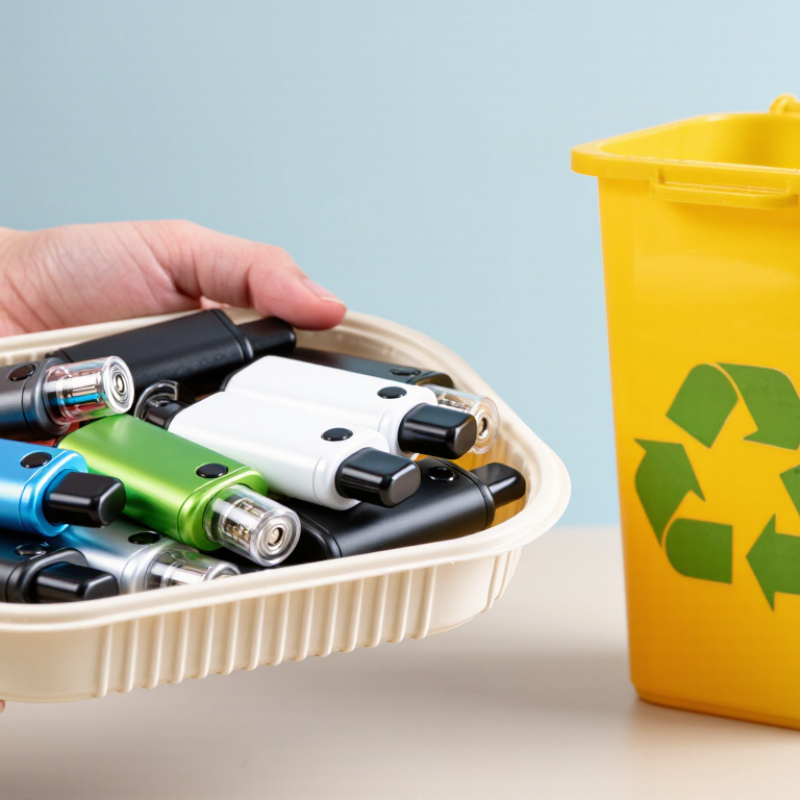
How to Recycle Disposable Vapes Eco Friendly in 2026?

Identify the Materials and Hazards in a Disposable Vape

How to Recycle Disposable Vapes Eco Friendly in 2026?

A disposable vape is not just plastic waste. Its body may contain plastic, aluminum, steel, copper, glass, and a small circuit board. Inside, a lithium-ion battery stores energy even after the device stops producing vapor. The liquid reservoir can retain nicotine, propylene glycol, vegetable glycerin, flavorings, and metal residues. The World Health Organization reports that e-cigarette aerosols may contain nicotine, volatile organic compounds, particulate matter, and toxic metals.

The battery creates the clearest hazard. Crushing, puncturing, or exposing it to heat can trigger smoke, fire, or thermal runaway. Residual liquid can irritate skin and contaminate recycling equipment. Keep it intact. Do not open it, squeeze it, or place it in household trash. Use a designated battery or electronic-waste collection point that accepts small lithium-ion devices. Staff can isolate batteries before mechanical processing.

The scale is growing. The Global E-waste Monitor 2024 recorded 62 billion kilograms of electronic waste worldwide in 2022, but only 22.3% entered documented formal collection and recycling systems. Disposable vapes add a difficult stream because their parts are tightly sealed. In practice, perfect separation is rarely possible. I would not assume an ordinary recycling bin can handle them. A safer process identifies the battery first, then sends the complete device to trained handlers. Keep damaged, swollen, leaking, or warm devices away from metal objects and other batteries. Record the collection route when possible; disposal advice still varies between facilities.

How to Recycle Disposable Vapes Eco Friendly in 2026? - Identify the Materials and Hazards in a Disposable Vape

Component or Material Typical Function Potential Hazard Environmental Concern Recommended Recycling Route
Lithium-ion battery Stores electrical energy for the heating coil and sensor. Can short-circuit, overheat, ignite, or release hazardous substances if crushed, punctured, or improperly handled. Contains recoverable metals and may cause fires in garbage trucks or recycling machinery. Take the intact device to a household hazardous-waste, battery-collection, or authorized e-waste facility. Do not place it in household trash or curbside recycling.
Lithium-ion battery casing and contacts Protects the cell and conducts electricity. Exposed terminals can contact metal objects and create a dangerous electrical short. Metal and electronic parts are lost when the whole device is landfilled or incinerated. Keep the device intact. If the battery is already removed, cover its terminals with non-conductive tape and follow local battery-recycling instructions.
Plastic housing Forms the outer body, mouthpiece, tank, and internal supports. May retain nicotine-containing liquid or contaminated residue. Mixed plastics and attached electronics make ordinary plastic recycling unsuitable. Send the complete device to an e-waste or hazardous-waste program. Do not place it in a plastics-only recycling bin unless the program specifically accepts vapes.
E-liquid reservoir or pod Stores the liquid mixture before it reaches the wick and coil. Leaks may expose people or animals to nicotine and other ingredients; nicotine can be harmful if swallowed or absorbed through skin. Liquid can contaminate soil and water if the device is damaged or discarded improperly. Do not drain, rinse, or empty the reservoir. Place a leaking device in a sealed, chemically resistant container and contact local hazardous-waste services.
Propylene glycol and vegetable glycerin Common liquid carriers used to produce aerosol. May irritate skin or eyes; the risk increases when the liquid also contains nicotine or flavoring chemicals. Disposal into drains can transfer chemicals to wastewater and aquatic environments. Keep the liquid inside the device and use an approved hazardous-waste collection route.
Nicotine and flavoring additives Provide nicotine delivery and flavor. Nicotine is toxic at sufficient exposure levels, especially for children and pets. Flavoring mixtures vary by product. Residual chemicals should not be released into soil, drains, or surface water. Avoid skin contact, keep away from children and animals, and use local hazardous-waste guidance for devices containing liquid.
Heating coil Heats the e-liquid to create an aerosol. May be hot immediately after use and can have sharp edges when dismantled. Often contains metal alloys that could otherwise be recovered. Do not dismantle solely to recover the coil. Leave it attached and use an e-waste recycling service.
Wick or absorbent material Holds and delivers e-liquid to the heating coil. Can retain nicotine-containing liquid after the device stops working. Contaminated absorbent material is not suitable for normal paper or textile recycling. Keep it inside the device and prevent liquid from contacting skin or household surfaces.
Circuit board, sensor, and LED Controls activation, airflow detection, battery protection, and status indication. Small components may have sharp edges; circuit boards should not be burned or crushed. Contains electronic materials and small quantities of metals that require specialized processing. Recycle as electronic waste through a facility that accepts small consumer electronics.
Metal frame, foil, or wiring Provides structural support and electrical connections. Cut or bent parts may cause injury during manual disassembly. Metals are difficult to recover when bonded to plastic, battery, and liquid-containing parts. Do not separate parts with household tools. Use a qualified e-waste recycler capable of processing mixed-material devices.
Safe handling reminder: Disposable vapes are mixed-material electronic products. Do not burn, crush, puncture, recharge, refill, dismantle, or place them in household garbage or curbside recycling. Store used devices in a cool, dry place away from heat, metal objects, children, and pets until they can be delivered to an appropriate collection facility.

Prepare the Vape Safely Before Recycling

How to Recycle Disposable Vapes Eco Friendly in 2026?

Prepare the Vape Safely Before Recycling

I used to think an empty disposable vape was harmless. It is not. Even a “dead” device may contain a lithium battery and liquid residue. Do not throw it into household trash or a recycling bin. Waste compactors can crush batteries, causing fires.

Keep the device away from heat, water, children, and pets. Do not charge, open, puncture, crush, or burn it. Never try to drain the remaining liquid. If the device is intact, place it separately in a cool, dry container during transport. Cover exposed metal contacts with non-conductive tape, but do not cover vents or damage the casing.

Check the device before leaving home. Stop handling it if it feels hot, looks swollen, leaks, smells unusual, or makes a hissing sound. Wear disposable gloves around leaked liquid, and avoid touching your face. Do not seal a damaged device in an airtight container. Instead, keep people away and contact your local household hazardous-waste or battery-recycling service for instructions.

Small details matter. I once nearly placed one beside ordinary electronics. That mistake would have been easy to miss. Recycling rules also differ by location, so confirm the facility accepts disposable vaping devices. Tell staff that the item contains a built-in battery and may contain nicotine residue. Never dismantle it yourself.

Find Certified E-Waste and Battery Collection Points

How to Recycle Disposable Vapes Eco Friendly in 2026?

A disposable vape contains a battery, electronics, and sometimes residual liquid. Treat it as e-waste, not ordinary rubbish. The Global E-waste Monitor 2024 reported 62 million tonnes of electronic waste in 2022. Only 22.3% was formally collected and recycled. Small devices still matter.

I used to think a nearby recycling bin was enough. It is not always suitable. Search your local authority’s website for certified e-waste or battery collection points. Look for facilities operating under recognised standards, such as R2 or e-Stewards, where available. Call before travelling. Some sites accept loose lithium-ion batteries but reject complete vapes. Others require a dedicated small-device stream.

Keep the device intact, dry, and away from metal objects. Do not crush, open, recharge, or burn it. Place it in a small bag only if the collection centre recommends that method. A damaged, swollen, hot, or leaking battery needs urgent advice from the facility. Never put it in household waste or a kerbside recycling box. Material Focus estimated that almost five million disposable vapes were discarded weekly in the UK during 2023. That figure feels abstract until batteries appear beside food containers. Recycling systems remain inconsistent, and collection-point information can be confusing. Checking twice is slower, but safer.

Transport and Hand Over the Vape Responsibly

Recycling a disposable vape does not end at the collection point. The journey there matters just as much.

Never place it in household waste or mixed recycling. Residual liquid and lithium cells can create fire, leakage, or contamination risks.

Keep it intact. Do not open, crush, puncture, or remove the battery. If possible, switch it off and cover exposed metal contacts with non-conductive tape. Place it in a small, rigid container that prevents movement, away from keys, coins, heat, and moisture. Do not carry it loose in a pocket or leave it inside a hot vehicle.

Before travelling, contact your local household hazardous-waste, e-waste, or battery collection service. Ask whether disposable vapes are accepted and follow its packaging instructions.

Rules and facility limits vary. Some sites require separate battery drop-off.

Take the device directly to the approved location instead of storing several at home. At the counter, explain that it is a used disposable vape with a lithium battery and possible nicotine residue. Honest details help workers choose safer handling.

Do not mail it or give it to an informal collector unless the service clearly permits that route.

If the vape is swollen, hot, smoking, or leaking, do not transport it normally.

Avoid touching the liquid and keep people away. Contact the local waste or emergency authority for instructions.

The process is not always convenient, and guidance can feel inconsistent. Still, the nearest bin may be the wrong choice.

Convenience is not proof of safety.

Avoid Common Disposal Mistakes and Environmental Risks

How to Recycle Disposable Vapes Eco Friendly in 2026?

Disposable vapes are small, but their waste is not. Material Focus reported that people in the UK discarded around five million disposable vapes weekly in 2023. That equals roughly eight devices every second. Each device may contain a lithium battery, electronic parts, plastics, and chemical residue. Empty does not mean harmless. The Global E-waste Monitor 2024 found that only 22.3% of global e-waste was formally collected and recycled in 2022. Vape waste can easily disappear into this gap.

Never place a vape in household rubbish or a mixed recycling bin. Crushing can damage the battery and create a fire risk in collection trucks or sorting facilities. Do not pierce, burn, wash, or dismantle the device. A practical mistake is assuming a recycling symbol guarantees acceptance. Local rules differ, and guidance can be imperfect.

Tips: Keep used devices in a cool, dry place away from metal objects. Take them to an approved battery or electronic-waste collection point. Ask the site whether it accepts small vaping devices before travelling. If the battery is swollen, leaking, hot, or damaged, avoid handling it and contact local waste authorities. Record the collection route you used; this small habit makes responsible disposal easier next time.

How to Recycle Disposable Vapes Eco-Friendly in 2026?

Estimated disposable e-cigarettes discarded in the United States increased substantially between 2020 and 2023. Because these devices may contain lithium-ion batteries, electronic components, plastic, and residual nicotine, they should not be placed in household recycling or regular trash.

Safer disposal steps: Keep the device intact, do not crush or puncture it, and take it to a household hazardous-waste, e-waste, or battery-recycling collection point that accepts electronic nicotine devices. Never burn, dismantle, or flush a disposable vape.

Data source: Truth Initiative, reporting an estimated 4.5 billion disposable e-cigarettes discarded in the U.S. in 2023 and a 46% increase from 2020. The 2020 value is calculated from that reported increase.

FAQS

Can I put a used disposable vape in household rubbish?

No. Residual liquid and lithium batteries can cause fires, leaks, or contamination. The nearest bin may be convenient, but unsafe.

Can I place it in a mixed recycling bin?

No. Sorting machinery can crush the device and damage its battery. Recycling symbols do not guarantee local acceptance.

How should I store a used disposable vape before drop-off?

Keep it intact in a small, rigid container. Store it somewhere cool and dry, away from keys, coins, heat, and moisture.

Should I remove the battery before recycling?

No. Do not open, crush, puncture, or dismantle the device. If metal contacts are exposed, cover them with non-conductive tape.

Where should I take a disposable vape?

Contact your local hazardous-waste, e-waste, or battery collection service. Ask whether it accepts disposable vapes before travelling.

What information should I give collection staff?

Explain that it is a used disposable vape with a lithium battery and possible residue. Honest details support safer handling.

Can I carry the device loose in my pocket or car?

No. Use a rigid container and keep it away from metal objects. Never leave it inside a hot vehicle.

What should I do if the device is swollen, leaking, hot, or smoking?

Do not transport it normally or touch leaking liquid. Keep people away and contact local waste or emergency authorities for instructions.

Can I mail the device or give it to an informal collector?

Only if an approved service clearly permits that route. Otherwise, take it directly to an authorised collection location.

How can I improve my disposal routine next time?

Record the collection route you used. It is a small habit, though I might forget it. Local guidance can still feel inconsistent.

Conclusion

Learning how to recycle disposable vapes in an eco-friendly way starts with understanding what they contain. A disposable vape may include plastic, metal, electronic components, residual e-liquid, and a built-in lithium battery, which can create fire, chemical, and pollution risks if handled incorrectly. Before recycling, do not open, crush, puncture, burn, or place the device in household trash or a standard recycling bin. Keep it away from heat, moisture, children, and flammable materials, and follow safe local guidance for temporary storage.

The safest option is to locate a certified electronic-waste facility, battery collection point, or designated vape recycling service that accepts these devices. Transport the vape carefully, preferably separately from other waste, and inform staff that it contains a battery and may hold e-liquid. Responsible handover allows specialists to separate recoverable materials and manage hazardous components properly, reducing the risk of fires, soil contamination, and unnecessary landfill waste. Always follow the instructions provided by your local recycling authority or collection center.

Aria

Aria

Aria is a dedicated marketing professional with a deep passion for innovative strategies and a keen understanding of our company's product offerings. With a wealth of experience in the industry, Aria excels at crafting engaging content that highlights the unique features and benefits of our......