In the rapidly evolving field of cloud production, optimizing small pod systems is becoming increasingly vital. Industry research indicates that small systems can yield significant output when effectively managed. A report from CloudTech Insights reveals that an estimated 30% of productivity gains can be achieved simply by refining operational practices in these systems. This provides a clear incentive to explore strategies around "How to get more clouds out of a small pod system."
Expert analyst John Smith emphasizes the importance of careful resource allocation. He states, "Maximizing every cubic inch of your pod can lead to exponential production growth." This highlights the need for specialized techniques and tailored solutions. As practitioners learn to navigate the limitations and potential of small pod systems, they must also be flexible in their approach. Understanding the nuances of system design and environmental controls can turn challenges into opportunities.
Investing in technology that monitors and optimizes conditions within small pods is crucial. Reports suggest that nearly 50% of production inefficiencies stem from environmental variability. It becomes essential to analyze data and make informed adjustments. While there is considerable room for improvement, these systems can become powerhouses. A deeper dive into methodologies that enable greater output will be necessary as the industry continues to innovate.
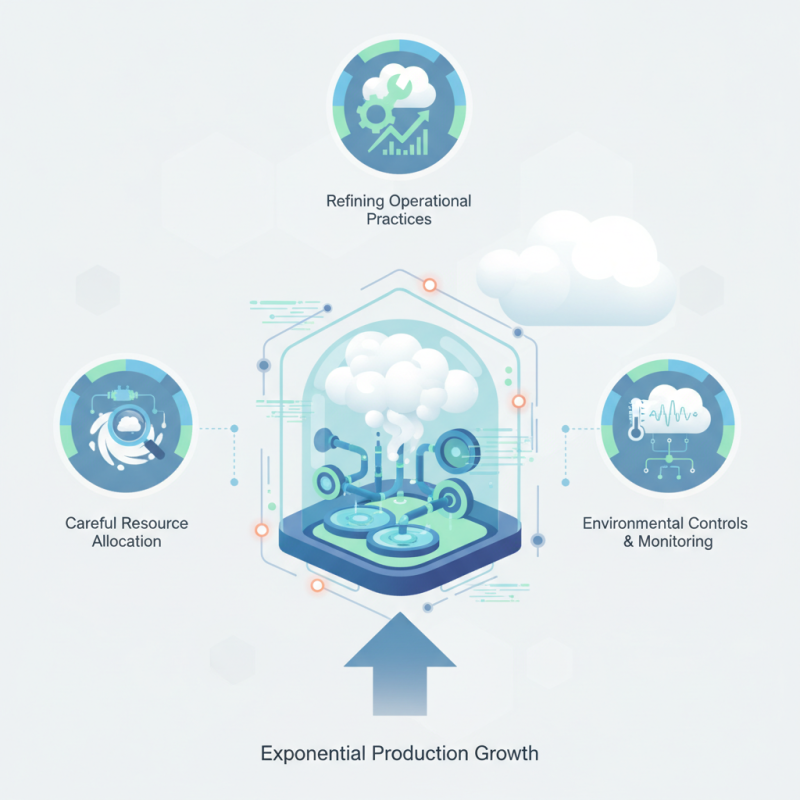
In a small pod system, understanding design principles is crucial for cloud production. These systems rely on efficient space utilization and precision climate control. Creating an optimal environment enhances plant growth and productivity. Proper airflow management prevents mold growth and ensures consistent temperatures. These factors significantly influence yield quality and quantity.
Lighting is another essential aspect. LED lights provide the specific wavelengths needed for photosynthesis. However, overexposure can lead to stress in plants. Balance is key. Positioning lights at the correct distance from plants can improve their health. Regular monitoring can help identify any issues early, allowing for adjustments that maintain an ideal environment.
Identifying suitable nutrients is equally important. Small-scale systems often require tailored feeding schedules. Too much or too little can impair growth. Nutrient absorption varies among plants, so adjustments may be necessary. Experimentation can lead to better outcomes. A keen eye for changes in plant behavior will guide you in refining these parameters. This process encourages ongoing learning and adaptation in cloud production.
: Optimal light exposure can increase yield by up to 40%. Too much light can cause photoinhibition.
Nutrient imbalances can reduce production efficiency by 30%. Precision in fertilization is essential due to space constraints.
Proper temperature and humidity levels enhance performance. Optimal humidity significantly boosts growth rates.
Automation can enhance efficiency and scalability, increasing production levels by 20-30%. It reduces human error.
Sensors and real-time monitoring allow for precise environmental control. Adjusting conditions based on data can improve yields by 15%.
Initial investments and regular maintenance pose challenges. Balance between automation and human input is necessary.
Regular monitoring of system metrics is vital. Cleanliness and organization are also essential to avoid contamination.
Use dashboards to visualize data trends. This can help pinpoint potential problems early on.
Training on emergency protocols minimizes downtime. Encouraging feedback can expose overlooked areas needing attention.
A routine cleaning schedule enhances system reliability. Neglect can lead to contamination and reduced productivity.
In "How to Maximize Cloud Production in a Small Pod System," the article delves into essential strategies for enhancing output within compact environments. It begins by outlining the fundamental design principles of small pod systems tailored for cloud production, emphasizing the importance of understanding space utilization and resource allocation. Key factors influencing cloud production, such as light, temperature, and humidity, are also discussed, offering insights into how growers can optimize these elements for improved yield.
Furthermore, the article explores advanced technologies and automation tools that can streamline operations, making it easier to maintain optimal conditions. By adopting best practices for system maintenance and management, growers can ensure sustainable cloud production. Overall, for those wondering "how to get more clouds out of a small pod system," this guide provides a comprehensive roadmap to maximizing benefits while minimizing challenges.

 Nano Vape