Traveling with vape batteries on an airplane requires careful planning. Many frequent flyers face confusion regarding airline regulations. Understanding how to travel with vape batteries on an airplane is essential for a smooth journey.
Airlines have specific rules about carrying vape batteries. Lithium-ion batteries are commonly used in vapes, but they can pose safety risks if not handled properly. It's vital to store these batteries in your carry-on luggage, not in checked bags. This way, you can easily access them if needed.
Most airlines limit the wattage and number of vape batteries allowed. Therefore, check your airline's guidelines before packing. Keep your vape devices and batteries in protective cases to prevent accidental activation or damage. Travelers should also consider bringing additional charging solutions, ensuring a hassle-free experience. Being informed helps reduce potential issues, making your travel more enjoyable.
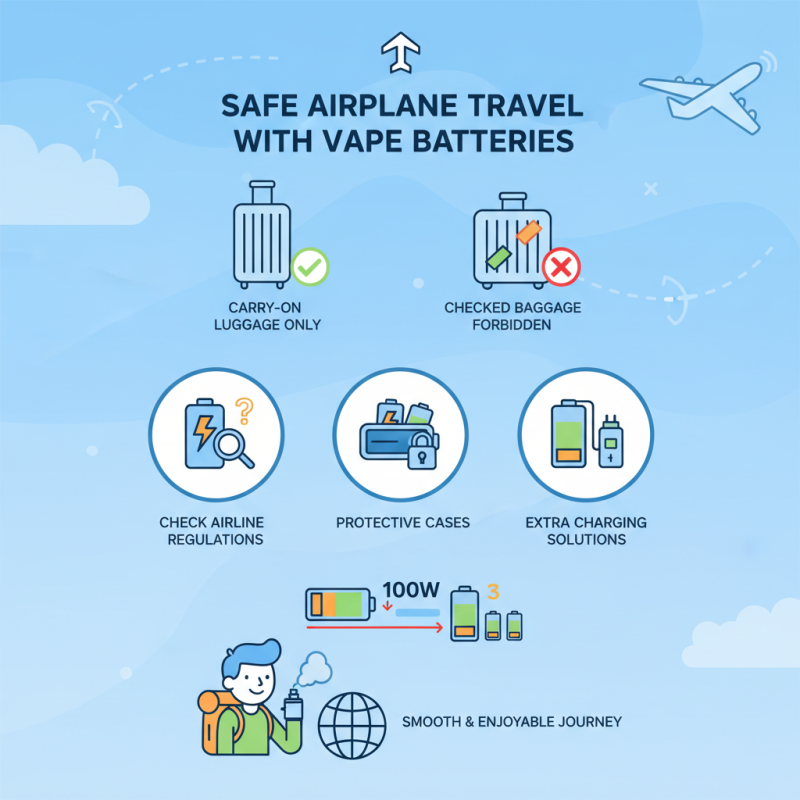
Traveling with vape batteries can be tricky due to strict airline regulations. Many airlines have specific rules regarding the transport of lithium-ion batteries, which are common in vaporizers. These batteries must be carried in your carry-on luggage. Stowing them in checked baggage is often not allowed due to potential fire hazards. Always consult your airline's guidelines before packing.
The size and quantity of batteries you can bring may vary. Typically, batteries under 100 watt-hours are permitted without restrictions. However, bringing spare batteries may have limits. It’s crucial to keep batteries in their original packaging or use a protective case. This helps prevent accidental activation or short-circuiting. You might find that your battery may be flagged at security. Be prepared to explain its purpose.
Being informed and cautious is key. Have multiple batteries? Check the limit for the specific airline. Misunderstandings can lead to surprises at security. Some travelers may overlook details, triggering unnecessary stress. Make a checklist before you travel. This can help ensure you adhere to guidelines. Your journey can be smooth if you're prepared and informed.
| Type of Battery | Watt-hour Rating (Wh) | Carry-on Policy | Checked Luggage Policy | Remarks |
|---|---|---|---|---|
| Lithium-ion | Up to 100 Wh | Allowed in carry-on | Not allowed | Keep terminals covered |
| Lithium-ion | 100 Wh to 300 Wh | Require airline approval | Not allowed | Limited to 2 per passenger |
| Lithium Metal | Up to 2 g | Allowed in carry-on | Not allowed | Keep terminals covered |
| Vape Mods with Integrated Battery | Varies | Allowed in carry-on | Not allowed | Remove liquid and secure |
: No, vape batteries must be carried in your carry-on luggage due to fire hazards.
Typically, batteries under 100 watt-hours can be carried without restrictions.
Keep batteries in their original packaging or a protective case to prevent accidents.
Be prepared to explain the battery's purpose to security personnel.
Check your airline's limit for the number of spare batteries allowed in carry-on luggage.
Store your batteries at half charge to prevent overheating during travel.
Alert the cabin crew immediately and do not try to handle the battery yourself.
Inspect your batteries for any signs of wear or damage to minimize risks.
Use a fire containment bag if available for a secure response to battery fires.
Yes, understanding specific airline regulations is crucial for a smooth travel experience.
When considering how to travel with vape batteries on an airplane, it's crucial to understand airline regulations specifically related to these items. This includes knowing which types of vape batteries are permitted and ensuring they meet safety standards. Choosing the right battery type can enhance safety during your journey.
Proper packing techniques play a vital role in preventing battery-related incidents. It is recommended to store batteries in their original packaging or protective cases, and to keep them in your carry-on luggage rather than checked baggage. Additionally, carrying spare batteries should be done safely, ensuring terminals are covered to avoid short-circuiting. Finally, it's essential to be prepared for any battery-related incidents during the flight, knowing the correct procedures to follow, to ensure everyone’s safety on board.

 Nano Vape