What Happens If You Leave a Vape in a Hot Car?

Time:2026-10-03 Author:Sophia
0%

“What happens if you leave a vape in a hot car” depends on the device, battery condition, and temperature reached inside the vehicle. A parked car can become dangerously hot, even when outdoor temperatures feel moderate. Sunlight through the glass warms the dashboard, seat, and nearby air. That heat can affect the battery, liquid, seals, and internal electronics.

The outcome is not always dramatic. Sometimes, the device leaks, produces a burnt taste, or stops working. In more serious cases, a damaged lithium-ion battery may swell, vent, smoke, or ignite. Battery safety guidance from manufacturers and fire-safety experts warns against storing these devices in extreme heat. A hot car also creates pressure inside sealed components, which can make leakage worse.

This guide examines the risks carefully. It explains warning signs, safer handling, and practical steps after heat exposure. Move the device away from sunlight. Do not charge, use, puncture, or squeeze it while it is hot or visibly damaged. Let it cool naturally in a safe, shaded place. Never place a swollen or leaking device near paper, fabric, or other flammable materials.

Do not rely on appearance alone. A vape may look normal while its battery has weakened internally. The exact result is difficult to predict, and that uncertainty matters. If you notice smoke, hissing, a strong chemical smell, or rapid heating, leave the area and contact local emergency services.
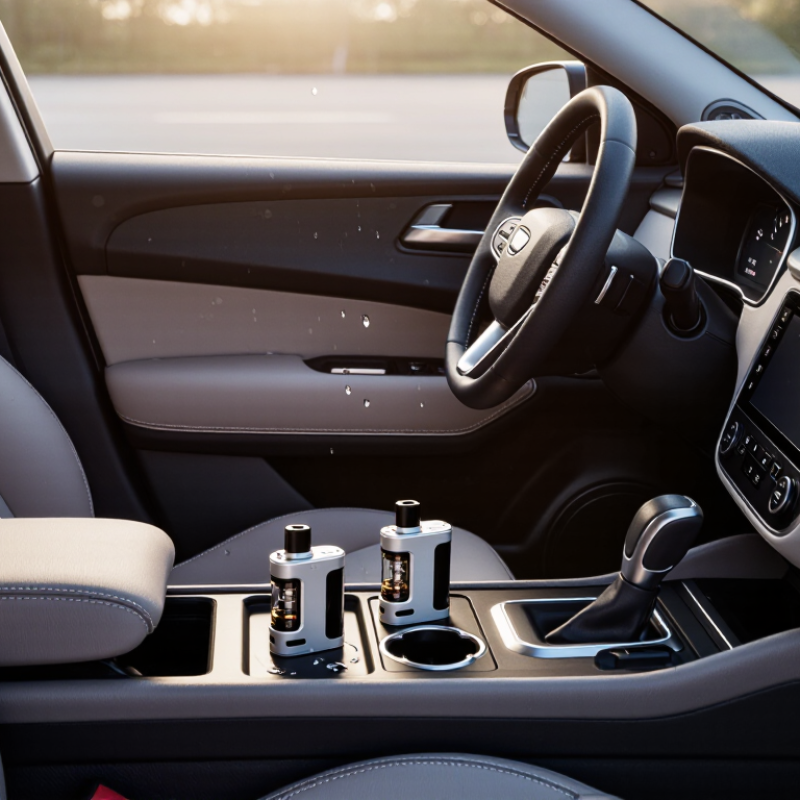
What Happens If You Leave a Vape in a Hot Car?

How Heat Affects a Vape’s Battery, E-Liquid, and Internal Parts

What Happens If You Leave a Vape in a Hot Car?

A parked car can become dangerously hot within minutes. Temperatures may rise above 60°C, even when the outside air feels mild. Heat stresses the vape’s lithium-ion battery and can reduce its capacity over time. In rare cases, a damaged or overheated battery may swell, vent, or ignite. Do not ignore warning signs.

The e-liquid also reacts to heat. It becomes thinner, which can cause leaking around the tank, mouthpiece, or seals. Some liquid may enter the airflow path and create gurgling or unpleasant taste. Heat can also affect nicotine strength and flavor, although the change may be difficult to notice immediately. Internal parts, including the coil, wiring, and control board, may suffer from softened seals or moisture after cooling. A vape may still turn on. That does not prove it is safe.

Tips:

Remove the device from the car and let it cool naturally in a dry, shaded place. Do not place it in a refrigerator or freezer. Avoid charging it while warm. Check for swelling, cracks, leaking, unusual odor, hissing, or excessive heat. If any sign appears, stop using it and keep it away from flammable materials. Follow local battery-recycling guidance for disposal. A short hot-car exposure may cause no visible damage, but relying on appearance alone is a mistake.

Warning Signs of Heat Damage in a Vape

A hot car can turn a vape into a damaged lithium-ion device.

The U.S. Fire Administration recorded 195 electronic-cigarette fire and explosion incidents between 2009 and 2016. Heat was not always the only cause, but it can worsen battery failure. A parked car may become dangerously hot within minutes, even when the outside temperature feels moderate.

Watch the device, not just the thermometer.

Warning signs include a swollen body, cracked casing, liquid leakage, dark discoloration, or a sharp burnt smell.

A vape that feels unusually hot, makes hissing sounds, activates by itself, or loses power suddenly also deserves caution. Stop using it immediately. Do not charge it or press damaged parts.

Move away from the device if it is smoking, swelling rapidly, or producing heat. Do not puncture, squeeze, or place it in water. If safe, keep people away and contact local emergency or hazardous-waste services.

The U.S. Consumer Product Safety Commission advises users to stop using lithium-ion products showing swelling, odor, overheating, or other damage. UL Solutions also identifies heat exposure as a factor that can accelerate battery degradation and increase thermal-runaway risk.

These warnings are practical, though not perfect. A device may look normal outside while its internal cells are already compromised. A cool case is not proof of safety.

Never leave a vape in a parked car, especially near windows or on a dashboard.

Possible Safety Risks from Leaving a Vape in a Hot Car

What Happens If You Leave a Vape in a Hot Car?

A parked car can become dangerously hot, even on a mild summer day. The dashboard may feel scorching within minutes. Heat can raise pressure inside the device and weaken its lithium-ion battery. In rare cases, the battery may vent, catch fire, or explode. A closed vehicle can make the damage worse.

The danger does not always appear immediately. A vape may look normal but still have internal battery damage. Swelling, leaking, hissing, a burnt smell, or unusual heat are warning signs. Never charge or use a device showing these symptoms. I once assumed a cool-looking device was safe after being heated, but that judgment can be unreliable. External appearance is not enough.

Tips: Take the vape out of the car whenever possible. Store it away from direct sunlight, heaters, and loose metal objects. Do not leave it in a glove box or center console for long periods. If it becomes hot, let it cool in a safe, dry place before handling it. If it swells, smokes, or smells unusual, avoid touching it and move away. Contact local emergency services if a fire starts.

What to Do After Finding a Vape Exposed to High Temperatures

What Happens If You Leave a Vape in a Hot Car?

A parked car can become dangerously hot within minutes. The National Highway Traffic Safety Administration reports that vehicle interiors may rise nearly 20°F in ten minutes and about 40°F within an hour. High heat can stress a vape’s lithium-ion battery, especially when it is already damaged, overcharged, or poorly stored. The U.S. Fire Administration documented 195 electronic-cigarette fires and explosions between 2009 and 2016, including 133 acute injuries. Heat alone does not guarantee failure, but it increases the risk.

What should you do after finding one? Do not inhale from it, charge it, press its buttons, or place it in your pocket. Look for swelling, leaking liquid, a burnt smell, hissing, or unusual warmth. If it feels hot, move away and keep people clear. Only if it is cool and safe to handle, place it on a nonflammable surface outdoors, away from paper, fabric, vehicles, and direct sunlight. Do not puncture, crush, freeze, or rapidly cool it.

If smoke, sparks, or flames appear, leave the area and contact emergency services. Never place a heat-exposed vape in household trash or recycling. Contact local hazardous-waste or battery-recycling services instead. The Federal Aviation Administration warns that lithium batteries can enter thermal runaway, producing intense heat and fire. I would not “test” a questionable device; that small decision can be the dangerous one.

What Happens If You Leave a Vape in a Hot Car? - What to Do After Finding a Vape Exposed to High Temperatures

Situation or Component What Heat Can Do Possible Warning Signs Risk Level Recommended Action
Vape containing a lithium-ion battery High temperatures can accelerate battery aging, reduce capacity, damage internal components, and increase the possibility of thermal runaway. Unusual warmth, rapid battery drain, swelling, hissing, smoke, or a chemical odor. High if damaged or actively heating Do not use, charge, puncture, or disassemble it. Move away from people and flammable materials only if this can be done safely. Contact local emergency services if it is smoking, burning, or rapidly swelling.
Disposable or sealed vape Heat may soften seals, deform the casing, affect the battery, or cause e-liquid to leak into the mouthpiece or airflow path. Cracked or bulging casing, sticky liquid, blocked airflow, leaking, or a strong unfamiliar smell. Medium to high Do not inhale from it or attempt to repair it. Place it in a safe, ventilated location away from heat and ignition sources, then follow local rules for battery or e-waste disposal.
Refillable device or removable battery Heat can damage the battery, tank seals, coil, or e-liquid. A loose removable battery can also short-circuit if its outer wrap is damaged or it contacts metal objects. Torn battery wrap, dents, corrosion, leaking tank, distorted seals, or a device that turns on without being activated. High when the battery is damaged Remove the device from service. Never use a battery with a torn wrap, dent, swelling, leakage, or overheating. Keep battery terminals protected and use an approved battery-recycling or hazardous-waste collection point.
Vape that is warm but intact The device may have experienced temporary heat stress without visible damage. External appearance alone cannot confirm battery safety. No visible damage, no odor, no leakage, and the device returns to normal room temperature. Use caution Do not use or charge it immediately. Let it cool naturally in a dry, shaded, well-ventilated area. If any abnormal sign appears during cooling, isolate it and arrange safe disposal.
Vape left inside a parked car Sun-heated vehicle interiors can become much hotter than the outdoor air. Direct sunlight and a closed cabin can expose the device to prolonged high temperatures. Hot casing, softened plastic, leaking liquid, distorted parts, or a battery warning indicator. Potentially serious Do not leave vapes in parked vehicles, glove compartments, or direct sunlight. After discovery, allow safe cooling and inspect for swelling, leakage, cracking, odor, or unusual heat before deciding on disposal.
E-liquid exposed to high heat Heat can increase leakage and may affect flavor, viscosity, and the condition of the container or seals. Nicotine-containing liquid can be harmful if swallowed or absorbed through skin. Leaking bottle or pod, damaged cap, liquid on skin, or an unusual color, smell, or consistency. Exposure hazard Avoid skin and eye contact. Wash exposed skin with soap and water. If swallowed or if symptoms occur, contact a poison-control service or obtain medical advice promptly. Keep liquid away from children and pets.
Device is smoking, burning, hissing, or rapidly swelling This may indicate battery failure and possible thermal runaway, which can release intense heat, fire, or irritating gases. Smoke, flames, loud popping, rapid swelling, intense heat, or a strong solvent-like odor. Emergency Move people away, avoid touching the device, and call emergency services. Do not carry it in a pocket, place it in water, or attempt to suppress a battery fire unless trained and equipped to do so.
Charging after heat exposure Charging a hot, wet, leaking, swollen, or damaged battery can increase the risk of overheating and fire. Charger or device becomes unusually hot, charging repeatedly stops, or the battery swells during charging. High if abnormal signs are present Never charge a device that is hot or damaged. Use only the charging method specified for an undamaged device; stop immediately if it heats abnormally. Dispose of damaged batteries through an appropriate collection service.
Cooling and inspection period Gradual cooling reduces handling risk, but it does not reverse internal battery damage caused by heat. The device is cool, dry, intact, and free from odor, swelling, leakage, or unusual behavior. Lower, not zero Inspect without opening the device. When in doubt, do not use it. A damaged or heat-compromised vape should be treated as electronic waste or battery waste rather than placed in household trash.
Important: Do not use or charge a vape that is swollen, leaking, cracked, smoking, unusually hot, or otherwise damaged. Battery and e-waste disposal requirements vary by location, so use a local approved collection point.

How to Store and Transport a Vape Safely in Hot Weather

A parked car becomes a heat box quickly. NHTSA guidance reports cabin temperatures can rise 20°F in ten minutes and 40°F within an hour. Cracked windows help less than many people expect. Heat stresses lithium-ion cells, weakens plastics, and can damage screens or seals. The U.S. Fire Administration advises keeping lithium-ion batteries away from extreme temperatures and direct sunlight.

Store a vape indoors, in a cool, dry place, away from windows and heaters. Keep it in a protective case, not loose with keys, coins, or tools. Metal contact can create a short circuit. If the battery is removable, use a separate battery case. Do not carry it uncovered. Do not remove an integrated battery by force. For air travel, IATA guidance recommends preventing accidental activation and protecting battery terminals. Always check the carrier’s current requirements.

Before transport, power the device off and let it cool naturally. Never charge it inside a hot vehicle. A swollen body, chemical smell, leaking fluid, hissing sound, or unusual heat requires caution. Stop handling it if possible, move people away, and seek local emergency advice. The exact safe temperature is not universal, and that uncertainty matters. It is tempting to trust a glove compartment, but that space can become extremely hot. I would rather make the inconvenient choice and bring the device indoors.

What Happens If You Leave a Vape in a Hot Car?

Vehicle interiors can heat rapidly in direct sunlight. In controlled hot-car testing, the average interior temperature increased by approximately 7°C within 10 minutes and 22°C within one hour. High heat can damage vape electronics, degrade lithium-ion batteries, and increase the risk of leakage, fire, or venting.

To transport a vape safely in hot weather, keep it out of direct sunlight, remove it from the vehicle when parked, store it in a protective case, and never leave loose batteries or a charging device inside a hot car. Allow an overheated device to cool naturally before using or charging it.

Source: McLaren et al., “Heat Stress From Enclosed Vehicles,” Pediatrics, 2005. Values show the average increase in vehicle interior temperature during hot-weather testing.

FAQS

What can happen if a vape stays inside a hot car?

A parked car can become a heat box quickly. High temperatures may raise battery pressure and weaken internal parts. In rare cases, the battery may vent, catch fire, or explode.

Can a vape look normal after being heated?

Yes, visible damage may not appear immediately. Internal battery damage can remain hidden. A normal appearance does not prove the device is safe.

Which warning signs require stopping use?

Watch for swelling, leaking fluid, hissing, smoke, chemical smells, or unusual heat. Do not charge or use the device. Move away and seek local emergency advice if needed.

Where should a vape be stored during hot weather?

Keep it indoors in a cool, dry place. Avoid windows, heaters, dashboards, glove boxes, and center consoles. A protective case helps prevent accidental damage.

Why should a vape stay away from keys and coins?

Loose metal objects can touch battery terminals. This contact may create a short circuit and generate dangerous heat. Keep the device covered.

What should I do if the device becomes hot?

Power it off if safe, then let it cool naturally in a dry, safe place. Do not charge it inside the car. I once trusted a cool-looking device too quickly, and that judgment was unreliable.

How should a removable battery be transported?

Place it in a separate battery case with protected terminals. Never carry it loose in a pocket, bag, or car compartment. Small metal contact matters.

Can cracked car windows prevent overheating?

Cracked windows may help less than expected. A vehicle can still heat rapidly in sunlight. The safest choice is taking the device indoors.

What should I do if a vape swells or smokes?

Stop handling it if possible. Move people away and avoid touching the device. If a fire starts, contact local emergency services immediately. Safety first.

Conclusion

What happens if you leave a vape in a hot car? High temperatures can affect its battery, e-liquid, seals, and internal components. Heat may cause the battery to lose performance, swell, leak, or become unstable, while e-liquid can thin out, expand, leak, or develop changes in flavor and consistency. Plastic parts, screens, and connections may also warp or malfunction. Warning signs include a hot body, unusual odor, leaking liquid, swelling, hissing sounds, or a device that no longer works normally.

If a vape has been exposed to extreme heat, do not use or charge it immediately. Move it away from flammable materials and allow it to cool naturally in a shaded, well-ventilated place. Do not puncture, open, freeze, or force the device to cool. If it shows damage, swelling, leakage, or unusual heat, stop handling it and follow local guidance for safe battery disposal. To reduce risks, store and transport vapes in a cool, dry location away from direct sunlight, enclosed vehicles, and other heat sources.

Sophia

Sophia

Sophia is a dedicated marketing professional with an exceptional depth of knowledge about her company's products and services. With a keen understanding of market trends and customer needs, she crafts insightful blog posts that not only inform but also engage readers, enriching the company’s online......